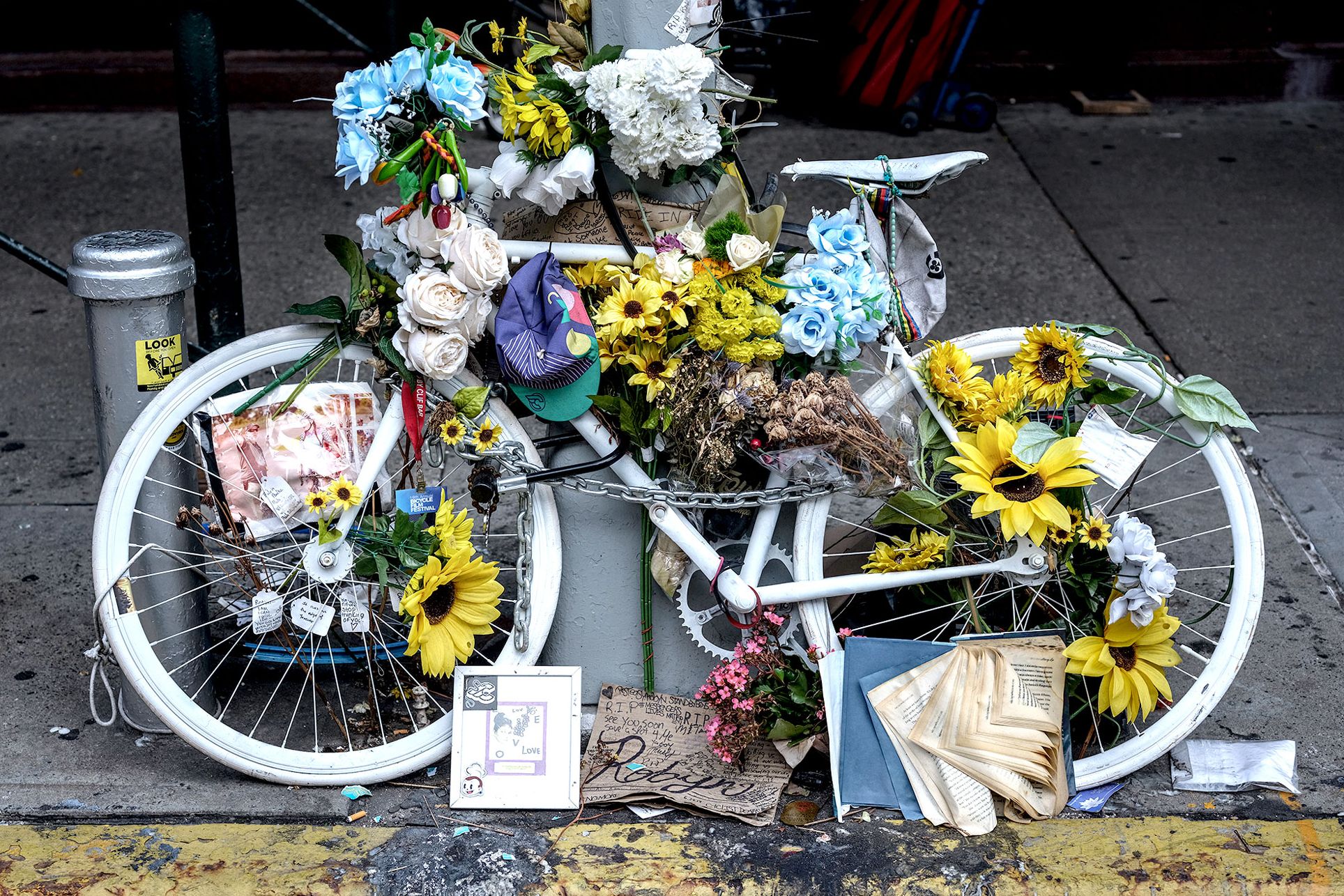
 Victor J. Blue, “What’s Really Killing New York’s Cyclists,” Bicycling.com
What is Stop as Yield?
Stop as Yield (aka “Idaho Stop”) A7071 McMahon | S639 May would allow cyclists to treat stop lights as stop signs, and stop signs as yields (video 0:22-2:06).
Over two hundred safe street advocates, bike clubs and public officials are in support. A3986 passed the Assembly in 2023.
Why do we need Stop as Yield?
In 2023, fifty one cyclists from across New York were killed in traffic crashes.
In 2019, twenty seven NYC cyclists were killed—more than half those deaths involved commercial vehicles.
In 2017, NYCDOT reviewed 3395 crashes between 2004-2016 where bicyclists were killed-or-seriously-injured and determined that 89% were struck by drivers at intersections.
Enabling cyclists to enter an intersection before a green light gets them out of truck drivers’ blind spots, safely past blocked bike lanes and ahead of cars turning left—the most common scenarios that put cyclists at risk.

“Right Cross”
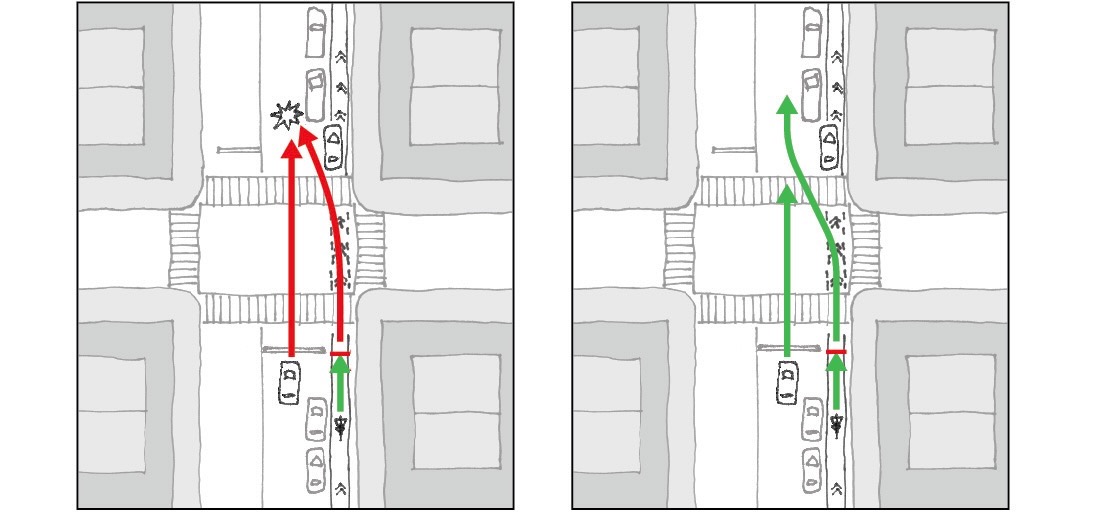
“Doored”
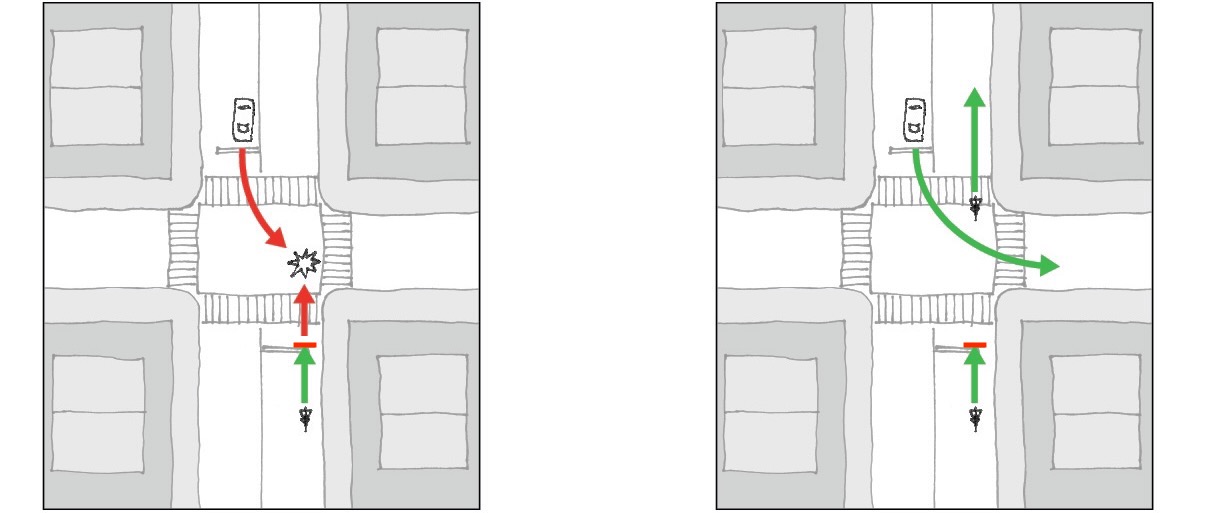
“Left Hook”
Allowing cyclists to yield at stop signs significantly reduces cyclist fatigue and duration in the conflict zone—additional risk factors.
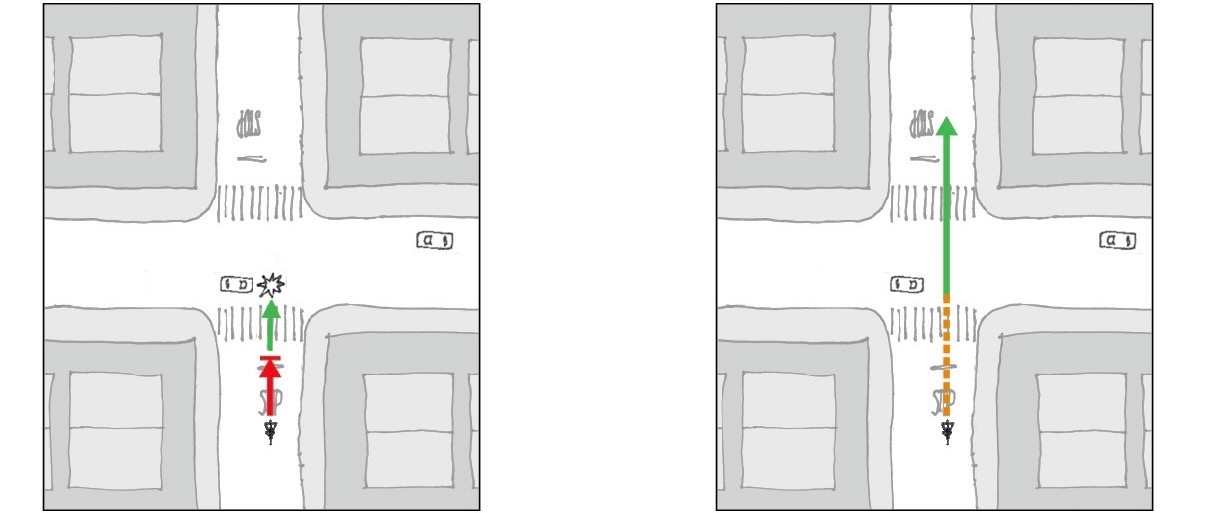
“Frogger” Illustrations Joseph Lertola.
Twelve states plus the District of Columbia have passed SAY laws. In 2022, the National Highway Traffic Safety Administration (“NHTSA”) found that SAY laws enabled bicyclists to “mitigate risk to their advantage.”
If New York seeks to sustain the growth of cycling, its must incorporate NHTSA guidance to allow cyclists to deconflict with motorists at intersections.
Other Reasons Cyclists do SAY
- Create separation while getting up to speed—particularly up hills
- Create a safe zone to navigate potholes, broken glass and car doors opening
- Minimize exposure to cars’ radiated heat and exhaust fumes
- Reduce exposure to snow and freezing rain, chance of crashing on icy roads
Disparate Enforcement
In late April 2025, and without warning, the NYPD began a policy of criminalizing traffic violations by cyclists. And often, as we would learn, for behavior that does not violate the law.
“Judge Michelle Weber threw out dozens of tickets that had been written without the proper legal code because officers are having a hard time finding the legal justification for their tickets.”
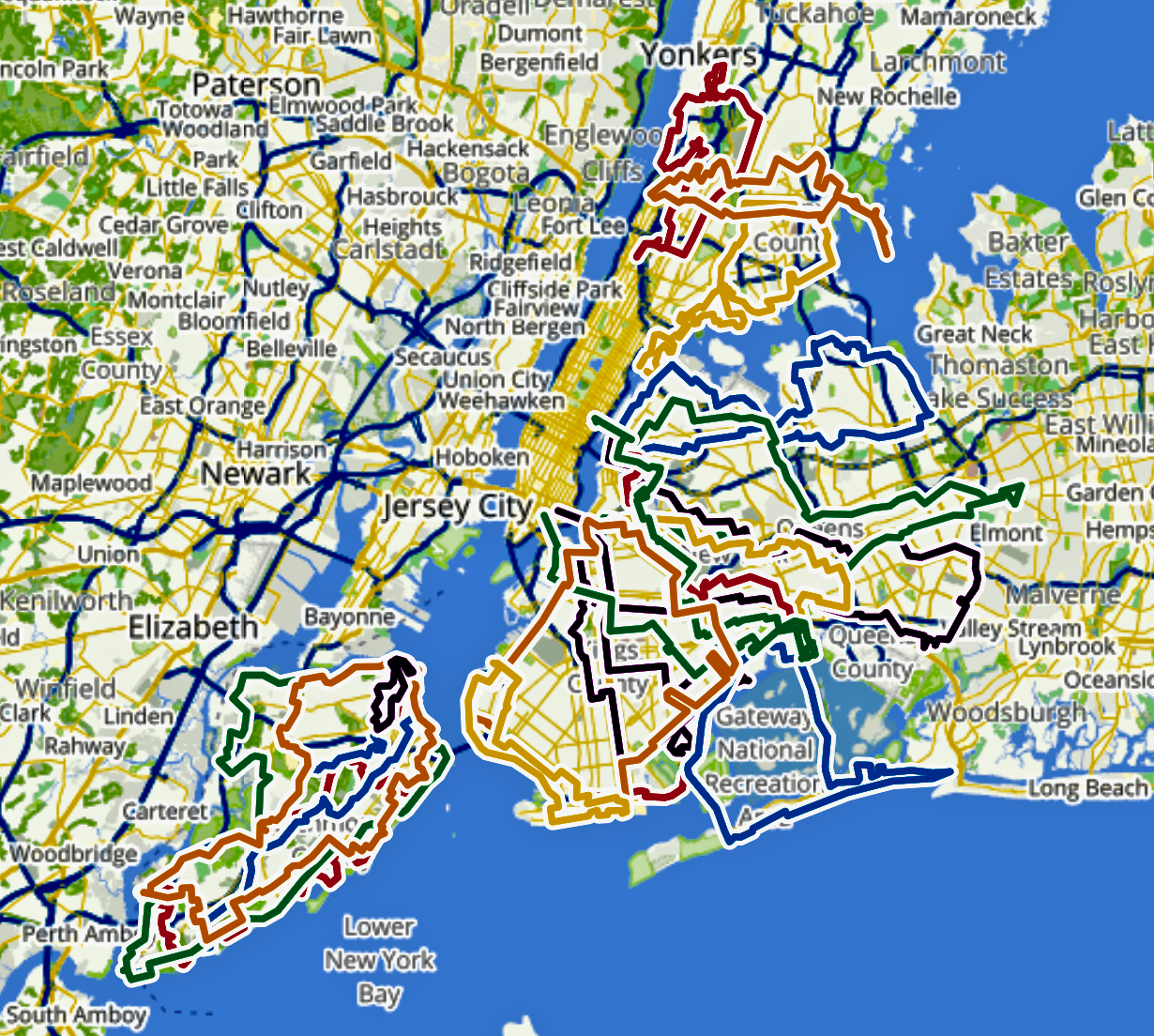
Unfortunately, NYC cyclists have long been singled out for enforcement, receiving 15% of all tickets written in 2024, despite comprising just 2% of traffic. Black and brown cyclists in particular.
This longstanding disparity, combined with NYPD’s new policy, increasingly exposes this cohort to the criminal justice system. Additionally, the potential to sustain a criminal record risks green card holders’ resident status.
Passing SAY would reduce opportunities for overzealous enforcement, pretextual stops and the criminalization of safe, predictable cycling behavior.
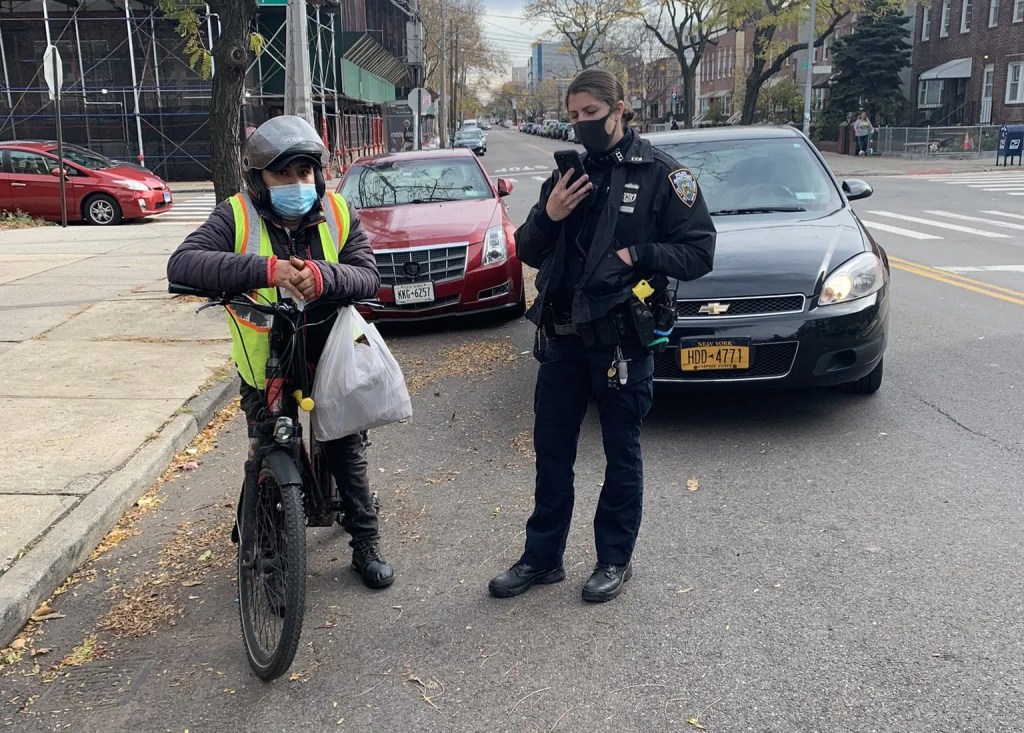
Twitter via StreetsBlog
Pedestrian Safety
Making cycling safer and easier will also make pedestrians safer. U.S. cities with double-digit bicycle mode share experience 80% fewer pedestrian fatalities.
FAQ
Has any major city implemented SAY?
Yes. Paris, a city of 2.1 million, explicitly prioritized pedestrian safety when they passed Stop as Yield in 2015:
“Cyclists must show prudence and respect in all circumstances—in particular pedestrians to whom they must always give way.”
Today, Paris rush hour bike commutes comprise 18.9% of total vs. 6.6% by car. France overall has 2/3 fewer pedestrian fatalities per capita than the U.S. And the improvement in air quality has been remarkable.
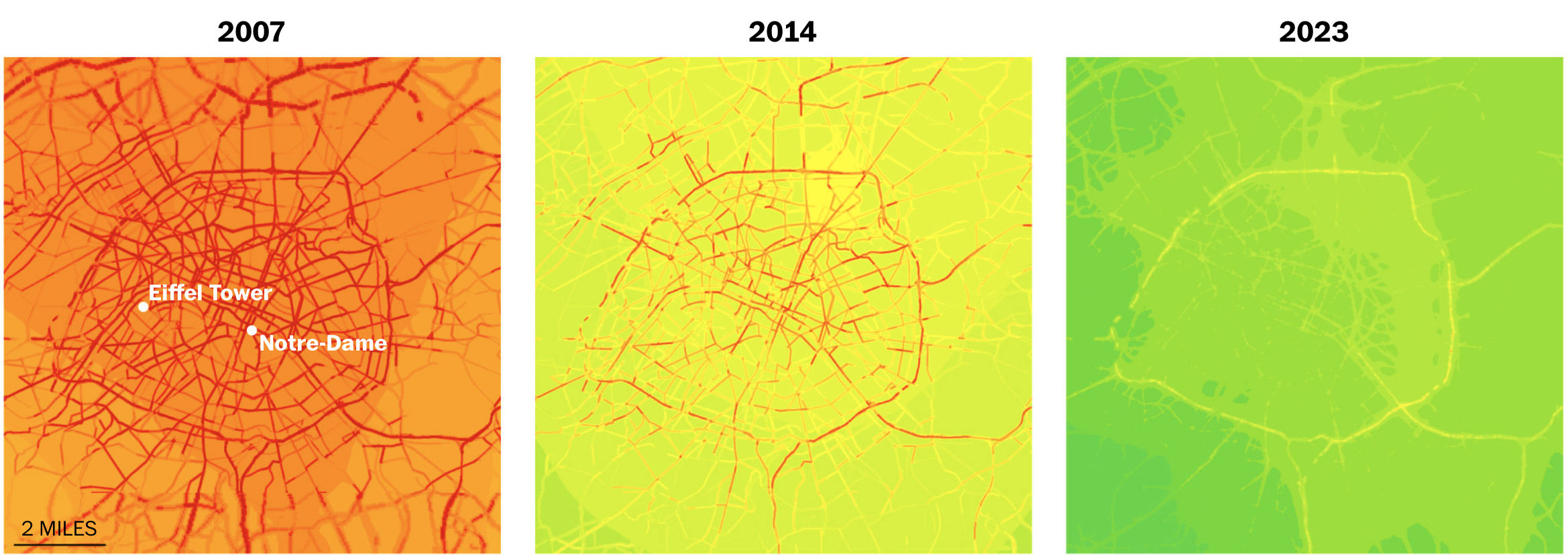
PM 2.5 particulant levels across Paris. Airparif via Washington Post.
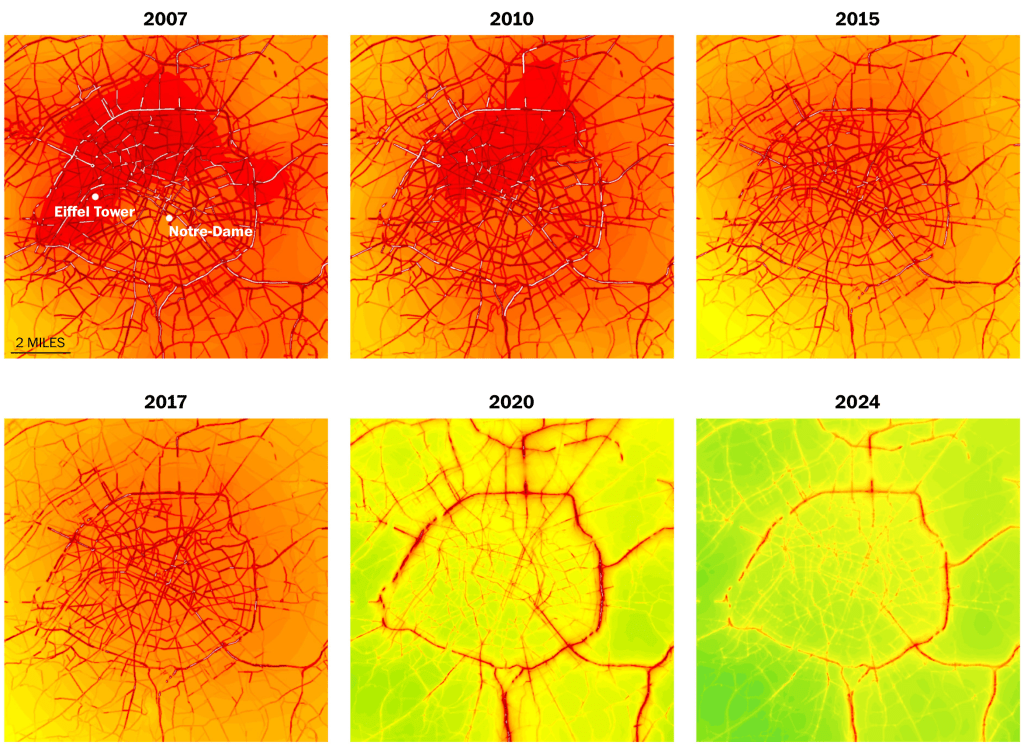
Nitrogen Dioxide levels
For comparison, urban areas in the U.S. fare much worse.
In 2022, scientists analyzing satellite data of thirteen U.S. cites found that the poorest areas experienced significantly higher levels of pollution than their wealthier counterparts. In New York and Newark, 26% greater.
In 2020, the American Lung Association graded Bronx, Brooklyn, Queens, Manhattan, Staten Island, Suffolk and Westchester an “F” for air quality.
Will SAY encourage cyclists to disobey traffic laws?
No—just the opposite. Conforming the law to how cyclists actually ride will enhance compliance.
In 2018, NYCDOT compared the behavior of cyclists offered the opportunity to proceed during “leading pedestrian intervals” (LPI, the functional equivalent of Stop as Yield), against those who weren’t. Result? Red light violations by cyclists given the LPI option dropped 66% compared to the control group.

NYCDOT
“The leading walk signal is an excellent way to protect both pedestrians and cyclists. It can prevent the danger from right-turning motorists.
It is also more convenient for the driver. If stopped cyclists gather with drivers at a red light, at the change to green the driver has to take exceptional care.
But if the cyclists can pedal off before drivers get the green, they simplify drivers’ situation.”
“A Valuable History Lesson for Jessica Tisch: ‘The Rules of the Road’ Were Written for Cars,” StreetsBlog, 5/19/25
Will SAY be harder to enforce?
No. Current enforcement wastes resources at quiet intersections where cyclists’ actions pose no risk to themselves or others.
Decriminalizing otherwise safe behavior (“malum prohibitum”) would then refocus enforcement on behaviors that genuinely impact pedestrian safety (“malum in se”) like failure to “respect pedestrian right-of-way in a crosswalk” [VTL 1151(a)]; or to “maintain a speed not reasonable or prudent” [VTL 1180(a)].
For context, a 2016 study in Chicago determined that 95% of cyclists approaching a signaled intersection either stopped for the full duration of the red light, or stopped-and-restarted, depending on traffic conditions. Only 5% continued without stopping.
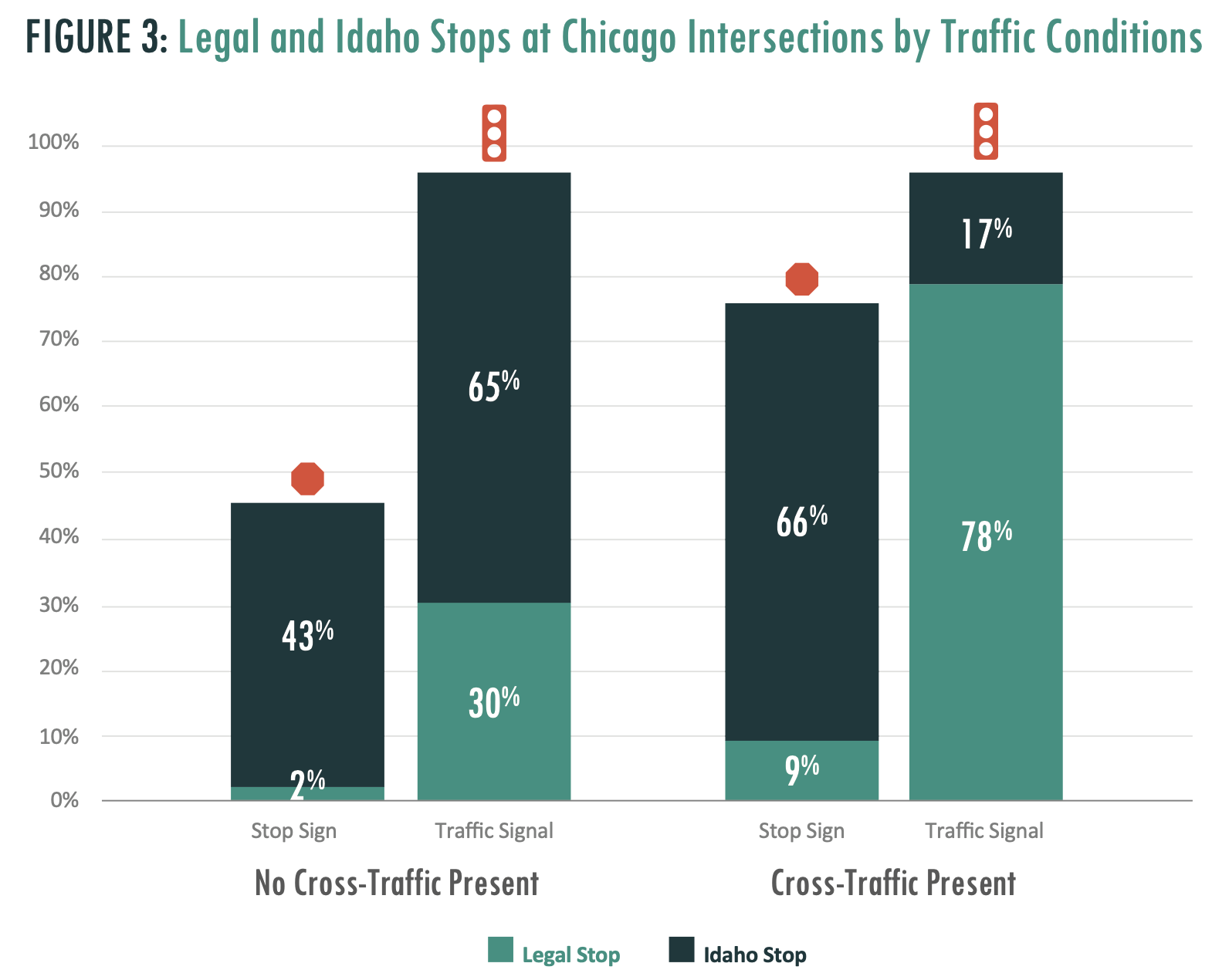
Chicago Department of Transportation
Will SAY apply to EBikes?
Yes. At red lights, EBikes must come to a full stop and wait for cross traffic and pedestrians to clear before proceeding. At stop signs, EBikes must reduce speed and yield to pedestrians and cross traffic.
Will SAY advance the Climate Leadership and Community Protection Act?
Yes. Allowing cyclists to yield at stop signs will facilitate DOTs to create networks of bikeways along secondary roads (“bike boulevards”) that cyclists often bypass to avoid repeated stopping.
Such networks will reduce vehicle miles traveled; enhance access to green space; grow jobs and tourism; yield significant reductions in morbidity and mortality; and broadly improve transportation resilience, affordability and equity.
 Complete George